
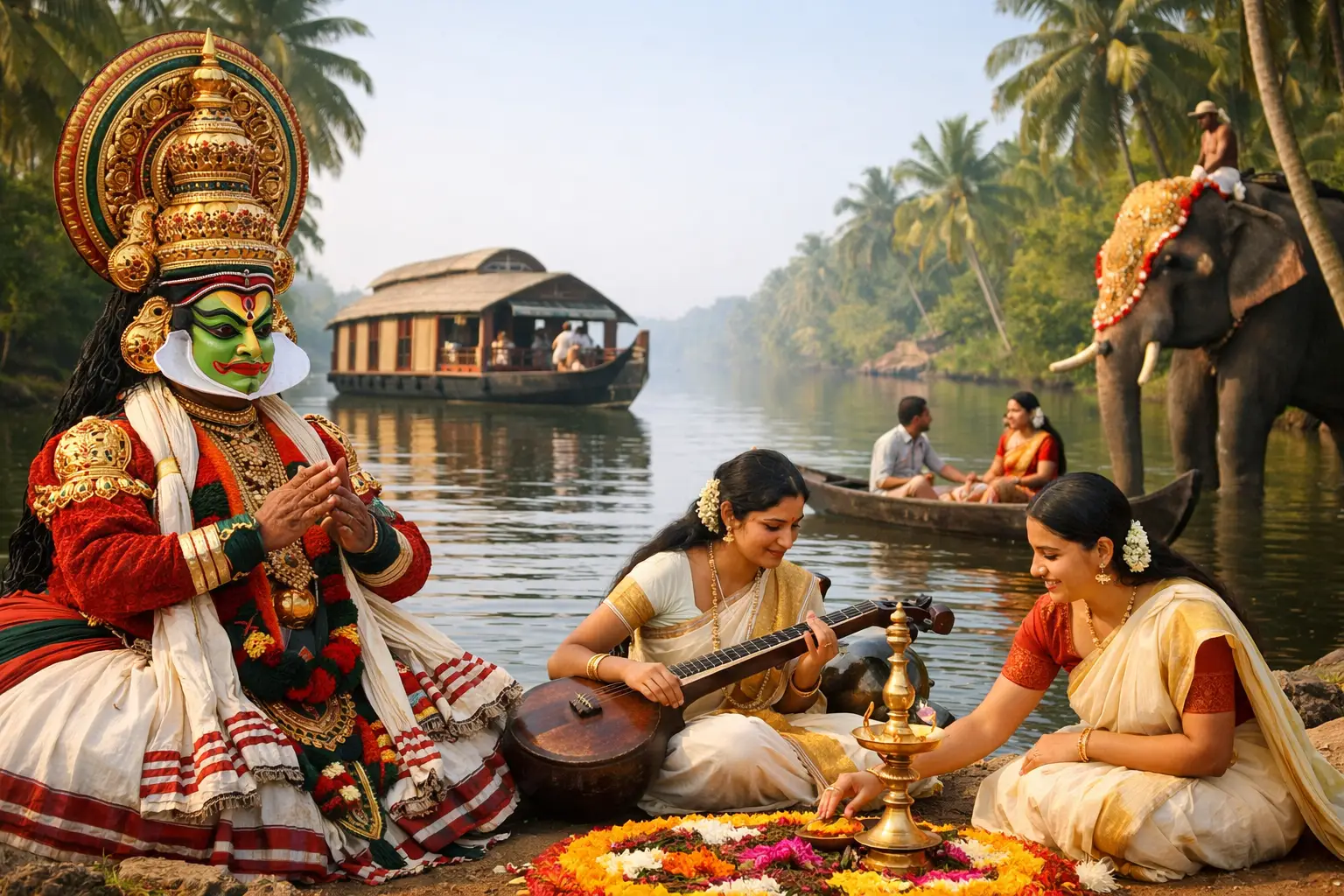
A sunrise temple bell in one village, the scent of cardamom drying in the hills, a home kitchen where lunch is served on a banana leaf – this is why Kerala cultural immersion tours appeal to travelers who want more than a checklist. Kerala is best understood through rhythm, ritual, conversation, and everyday life. The real value is not how much you see in a week, but how meaningfully you experience it.
For many visitors, Kerala has an immediate visual pull. Backwaters, tea estates, beaches, and lush greenery make it easy to fall in love with the landscape. But scenery alone does not create connection. Cultural immersion adds context to beauty. It helps travelers understand why a traditional art form is still practiced, how local food reflects geography and community, and what responsible tourism looks like when local livelihoods are part of the journey.
What makes Kerala cultural immersion tours different
A standard vacation often treats culture as a performance viewed from a distance. A stronger travel experience brings you closer, while still respecting boundaries. In Kerala, that can mean staying in a heritage property instead of a generic hotel, joining a cooking session with a local family, walking through a market with a guide who explains ingredients and customs, or attending an evening performance with enough background to appreciate what you are seeing.
This difference matters because Kerala is layered. It carries Hindu, Muslim, Christian, and Jewish histories across towns and neighborhoods. It is shaped by maritime trade, monsoon agriculture, Ayurveda, literature, classical arts, and strong community traditions. Without interpretation, a traveler may admire the surface. With the right planning, that same traveler begins to understand the place.
That is where a curated tour has real value. Cultural travel is rewarding, but it also depends on timing, access, etiquette, and local relationships. A well-designed itinerary can connect heritage, comfort, and authentic engagement without making the experience feel staged.
The experiences that create real connection
Kerala rewards slower travel. One meaningful encounter often stays with you longer than a rushed day of sightseeing. The most memorable cultural moments are usually simple, grounded, and personal.
Food is often the first bridge. Kerala cuisine changes from coast to highlands and from one community to another. Seafood in Alleppey, Syrian Christian specialties near Kottayam, vegetarian sadya meals during festive seasons, and Malabar dishes in the north all tell different stories. A cultural itinerary that includes cooking, shared meals, or even guided tasting brings those stories to life in a way a restaurant stop alone cannot.
Performing arts offer another layer. Kathakali and Mohiniyattam are visually striking, but they become much more powerful when a traveler understands the symbolism, costumes, and facial expressions behind the performance. The same applies to martial art traditions such as Kalaripayattu. Context turns a show into an encounter with living heritage.
Village life and craft traditions can be just as moving. Coir making, handloom weaving, pottery, fishing practices, and spice cultivation all reveal how culture is tied to work, land, and family routines. These experiences should feel respectful and mutually beneficial, not intrusive. That balance is one of the biggest differences between responsible immersion and tourism that simply borrows local life for entertainment.
Why personalization matters in Kerala
Not every traveler wants the same kind of cultural depth. Some want quiet heritage stays, temple architecture, and food experiences. Others want active days with markets, festivals, local transport, and extended interaction with communities. Families may want softer pacing and hands-on activities, while diaspora travelers may be looking for reconnection, memory, or identity.
That is why personalization matters so much in Kerala. A thoughtfully planned trip can match comfort levels, interests, mobility needs, and available time. It can also account for seasonality. Monsoon travel, for example, offers lush landscapes and a special atmosphere, but it changes how certain experiences are timed. Festival periods can be extraordinary, yet they also require careful advance planning and crowd awareness.
The right itinerary does not try to force every iconic element into one trip. It chooses well. A few days in Fort Kochi and the backwaters may suit one traveler perfectly. Another may benefit from combining Kochi, the highlands of Munnar, and a cultural stay in a quieter inland region. A meaningful tour is rarely about maximum coverage. It is about the right mix.
Kerala cultural immersion tours and responsible travel
For culturally curious travelers, responsibility is not an extra feature. It is part of what makes the journey worthwhile. If a trip claims to be immersive but leaves little benefit behind for local people, the experience is incomplete.
Kerala is one of India’s most compelling destinations for responsible tourism because community-based experiences can be integrated naturally into travel. Local guides, family-run stays, artisans, small-scale food producers, performers, and boat operators all contribute to a travel economy that can spread value more widely when designed with care. Travelers increasingly want to know that their presence supports livelihoods, respects traditions, and avoids unnecessary waste or disruption.
This does not mean sacrificing comfort. In fact, the strongest cultural itineraries often combine both. You can enjoy polished logistics, quality accommodations, and professional support while still choosing experiences that are grounded in community and heritage. Comfort and conscience are not opposites. In Kerala, they can work together beautifully.
A professionally managed operator helps make that possible by vetting partners, organizing realistic travel times, and building in moments that feel genuine rather than performative. That level of care is especially valuable for international visitors who want reassurance as well as authenticity.
How to choose the right immersion experience
When travelers search for culture-focused tours, it helps to ask a better question than What will I see? A more useful question is How will I engage?
A strong Kerala cultural immersion tour should make space for interaction, reflection, and local insight. It should not be packed so tightly that every day feels transactional. Look for itineraries that balance guided interpretation with free time, and heritage highlights with lived experiences. A houseboat night may be memorable, but so may an afternoon conversation over tea in a family courtyard or a walk through a centuries-old neighborhood with someone who knows its stories.
It also helps to be honest about your own travel style. Some travelers enjoy rustic settings if the cultural value is high. Others prefer a more comfort-focused base with selected immersive outings. Neither approach is wrong. What matters is alignment. The best tours are not the most adventurous on paper. They are the ones that fit the traveler well.
If you are traveling with children or older family members, pacing becomes even more important. Kerala can be wonderfully family-friendly, but road transfers, weather, and activity levels need to be planned with care. The same is true for special-interest travel such as culinary journeys, festival-based travel, Ayurveda-centered stays, or heritage-focused itineraries.
Who benefits most from this style of travel
Kerala cultural immersion tours are especially rewarding for travelers who want their vacation to feel personal and lasting. Couples often choose them because shared cultural experiences create stronger memories than passive sightseeing. Families value them because they give children and teens a more human understanding of place. Diaspora travelers often find them meaningful because they open a door to heritage in a way that feels guided, respectful, and emotionally grounded.
They also make excellent gift experiences. For someone who values connection over possessions, a thoughtfully planned journey through Kerala can become an unforgettable gift – one that combines beauty, learning, and real impact.
For socially conscious travelers, this format offers reassurance that enjoyment and responsibility can coexist. For first-time visitors to India, it offers structure and confidence without flattening the destination into something generic. And for repeat visitors, it reveals how much more there is to discover when travel moves beyond the surface.
A place like Kerala does not ask to be rushed. It invites you to pay attention – to meals, music, ritual, landscape, and conversation. When a journey is designed with local knowledge, cultural respect, and reliable support, travel becomes more than a break from routine. It becomes a chance to discover, experience, and leave a positive impact while carrying something meaningful home with you.