
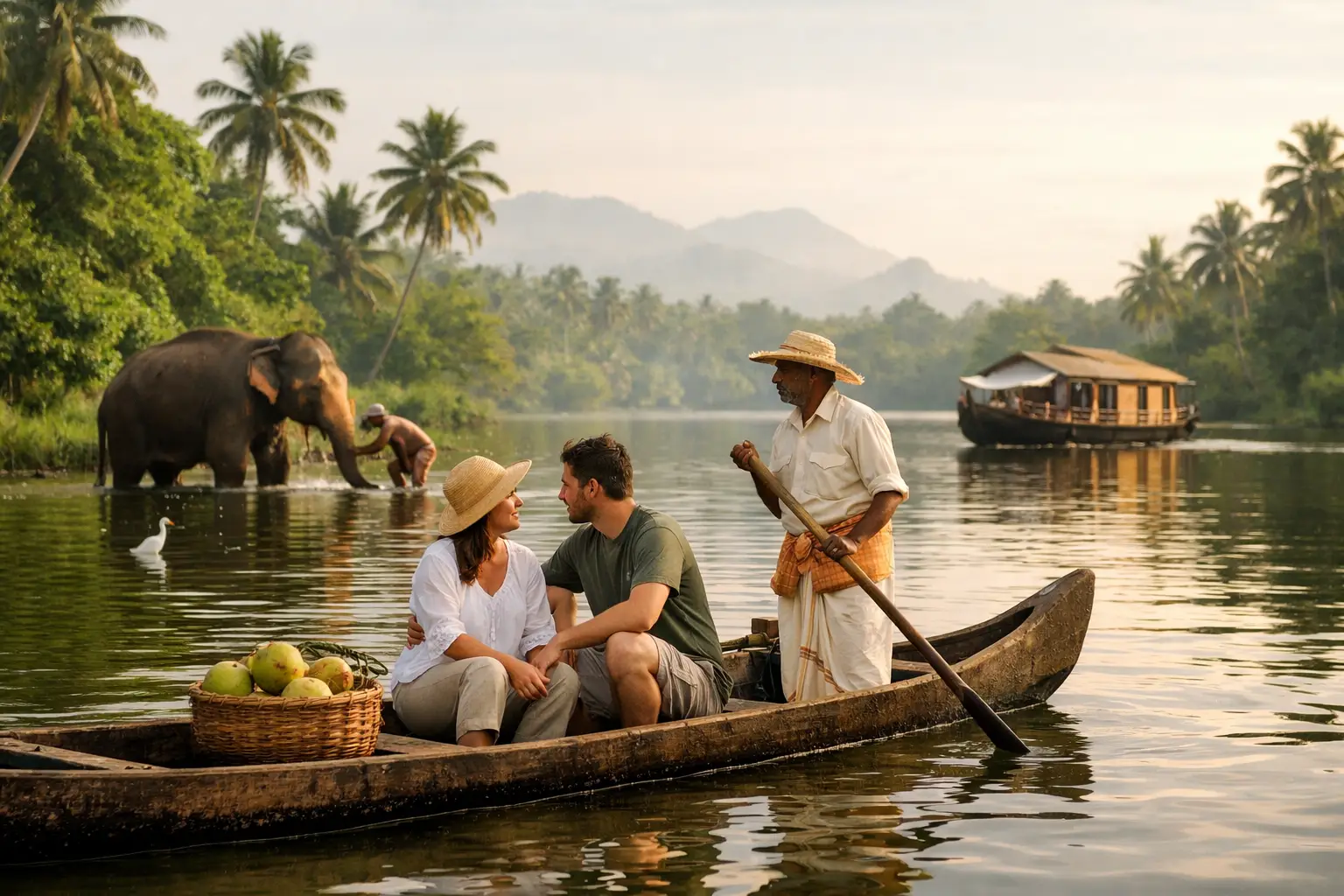
A sunrise canoe ride through village backwaters feels very different when you know the person guiding you lives there, grew up on those waterways, and benefits directly from your visit. That is the real promise of kerala responsible tourism packages – not just seeing Kerala, but experiencing it in a way that respects its people, protects its landscapes, and leaves something positive behind.
For many travelers, Kerala is an easy sell. The backwaters, hill stations, Ayurveda traditions, wildlife, spice gardens, and coastal culture already make it one of India’s most rewarding destinations. The harder question is how to experience all that beauty without turning it into a checklist or putting pressure on the places and communities that make it special. Responsible travel answers that question by changing how the trip is designed, who benefits, and what kind of memories you take home.
What Kerala responsible tourism packages really mean
Responsible tourism is sometimes treated like a label for eco-friendly stays or low-plastic travel. In Kerala, it should mean much more. A well-designed responsible package creates genuine local participation, fairer income distribution, and more thoughtful use of natural and cultural resources.
That could include staying in locally rooted accommodations instead of anonymous properties, choosing community-led activities, eating regional food made from local produce, and traveling at a pace that respects the destination rather than rushing through it. It also means thoughtful logistics. Comfort still matters. Safety still matters. A meaningful trip should not feel disorganized or uncertain.
This is where a professionally planned journey makes a difference. The best experiences are often the most nuanced ones. A village walk can be deeply enriching, but only if it is welcomed by the community and arranged with care. A plantation visit can support local livelihoods, but only if it is more than a staged stop for photographs. Responsible tourism is not about doing less. It is about doing better.
Why this approach matters in Kerala
Kerala’s appeal comes from living ecosystems and living culture. Its backwaters are not theme-park scenery. They are working waterways. Its traditional art forms are not hotel entertainment created for outsiders. They are part of cultural lineages. Its farming communities, fishing villages, and craft traditions are not background material for travel content. They are central to the region’s identity.
That is why travel choices have real consequences here. Large-scale, poorly managed tourism can strain fragile environments, push communities to the edge of the visitor economy without fairly rewarding them, and flatten local culture into performance. On the other hand, carefully built kerala responsible tourism packages can direct spending toward local providers, reduce wasteful patterns, and create more respectful encounters between visitors and hosts.
There is also a better traveler experience at stake. Many people no longer want vacations that feel detached from the places they visit. They want authenticity, but they also want context. They want comfort, but not at the cost of connection. Responsible tourism works because it meets both needs.
What to look for in a well-designed package
Not every package marketed as responsible is actually thoughtful. Some simply add a nature activity and use sustainable language. A stronger package is built differently from the start.
First, look at who is included in the travel economy. Are local guides, artisans, farmers, cooks, and small hospitality providers part of the itinerary in meaningful ways? Second, look at pacing. Kerala rewards slower, more intentional travel. A package that tries to cover every region in a few days may create more transport time than real experience.
Third, notice whether the itinerary balances comfort with impact. Responsible travel does not require giving up quality. It requires making better choices about where you stay, what you do, and how those experiences are managed. Finally, ask whether the operator understands the destination at ground level. Kerala is not one uniform experience. Coastal life, plantation landscapes, heritage towns, and rural village settings each require different planning, local insight, and cultural sensitivity.
The kinds of experiences that make a difference
The most memorable responsible travel experiences in Kerala are often the quietest ones. A family-hosted meal can reveal more about a region than a standard restaurant stop. A coir-making demonstration, a visit with local farmers, or a conversation with artisans can turn sightseeing into understanding.
Backwater experiences are a good example of where choices matter. A large, crowded cruise may offer convenience, but a smaller and more locally connected experience often feels more personal and has a lighter footprint. In the same way, a heritage walk led by someone with lived knowledge of the place offers more value than a surface-level overview.
Nature-based activities also benefit from restraint. Wildlife areas, hill regions, and waterways need visitor management, not overuse. The right package creates access while respecting seasonal conditions, carrying capacity, and local conservation realities. Sometimes that means choosing fewer activities with more depth. For many travelers, that trade-off leads to a richer journey, not a smaller one.
Comfort and responsibility can work together
One of the biggest misconceptions about responsible tourism is that it is only for rugged travelers. In reality, many guests want smooth coordination, comfortable stays, guided support, and reliable transportation while still making ethical travel choices. Those priorities are not in conflict.
A well-curated package can handle itinerary design, bookings, transfers, local coordination, and on-ground assistance while keeping community benefit and environmental stewardship at the center. That combination matters for international travelers, families, older guests, and anyone who wants reassurance alongside authenticity.
This is especially true in Kerala, where the best journeys often combine multiple settings – perhaps a cultural stay in Fort Kochi, a slower backwater experience, a plantation retreat in the hills, and a wellness or heritage component. Coordinating those elements responsibly takes destination expertise. Done well, it feels effortless for the traveler while remaining respectful to the places involved.
Who Kerala responsible tourism packages are best for
These packages work especially well for travelers who want their trip to feel personal and meaningful. Families often appreciate them because they create memorable learning experiences without sacrificing ease. Culturally curious travelers value the access to lived traditions rather than staged versions of them. Diaspora travelers may find that this approach offers a more intimate connection to heritage, community, and place.
They are also ideal for gift buyers and celebration travelers who want an experience with emotional value. A journey designed around local culture, nature, and positive impact feels more lasting than a generic vacation. And for socially conscious travelers, responsible packages offer something increasingly rare – the chance to enjoy a destination wholeheartedly while knowing your visit has been planned with care.
How thoughtful planning changes the trip
The difference between a standard itinerary and a responsible one is not always visible on the brochure. It shows up in the details. It is in the choice of local partners. It is in whether a village visit is invited and beneficial rather than intrusive. It is in transport planning that reduces unnecessary strain. It is in meals that reflect regional identity instead of flattening every destination into the same menu.
It also shows up in flexibility. The best travel planning leaves room for human realities. Weather changes. Community schedules matter. Seasonal availability affects what should be included. Responsible travel is not rigid. It is responsive.
That is why expert curation matters so much. A values-led operator can shape an experience that feels polished and comfortable while staying grounded in ethics and local respect. When done right, the journey feels more connected at every step. Indian Tour approaches Kerala in exactly this spirit – as a destination to be experienced with care, not consumed in haste.
Choosing the right package for your travel style
If you are considering kerala responsible tourism packages, start by thinking less about ticking off landmarks and more about what kind of connection you want. Do you want village life, heritage, food, nature, wellness, or a little of each? How much pace feels right for you? What level of comfort do you want throughout the trip?
From there, the strongest package is usually the one tailored to your interests rather than the one with the longest list of stops. A shorter itinerary with deeper local engagement can be far more fulfilling than a packed route across the state. Responsible travel is not about perfection. It is about intention, balance, and better choices made consistently.
Kerala gives travelers a rare opportunity: to enjoy extraordinary beauty while participating in a more thoughtful model of tourism. When your journey supports local communities, respects culture, and protects the landscapes you came to admire, the experience stays with you differently – not just as a vacation, but as a connection worth remembering.